Daffodil
A Springtime Accent for Every Craft Fair
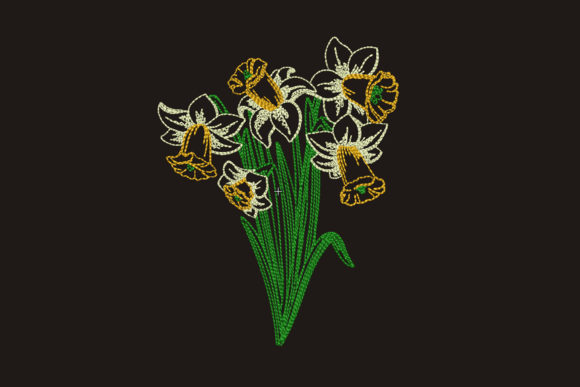
The Daffodil embroidery design makes a strong first impression with its clean, elegant lines and vibrant floral form. It feels fresh, modern, and perfectly suited for spring-related products. As an experienced embroidery designer, I immediately recognized its potential to stand out in a crowded craft fair booth or online marketplace. The design strikes a balance between bold and delicate, offering versatility that can appeal to a wide range of customers.
Visual Impact on Key Products
The Daffodil design performs exceptionally well on a variety of craft fair products. On tote bags, it adds a pop of color without overwhelming the overall design. Its placement as a central motif on aprons or tea towels creates a focal point that draws attention. For embroidered patches, the design’s simplicity ensures clarity even at smaller sizes, making it ideal for accessories like caps and fabric pouches.
When applied to pillow covers or market bags, the Daffodil design brings a touch of farmhouse charm and rustic elegance. Its ability to work on both light and dark fabrics is a major plus, allowing for greater flexibility in product creation. The design also looks great on handmade gifts and booth samples, where visual appeal is key to attracting buyers.
Photography and Online Presence
One of the most important considerations for Etsy sellers and digital embroidery creators is how the design looks in photographs. The Daffodil embroidery design holds up well in high-quality images, especially when paired with complementary thread colors. It’s crucial to test different thread colors and fabric textures to ensure the final product looks as appealing in photos as it does in person.
For printable mockups and digital embroidery files, the Daffodil design offers excellent scalability. However, it’s worth noting that dense stitch areas may lose some detail when viewed at smaller sizes. This means that while the design works beautifully on larger items like aprons or tote bags, it might need careful consideration when used on smaller products such as fabric pouches or embroidered patches.
Practical Production Notes
As a professional embroidery designer, I recommend testing the Daffodil design on scrap fabric before proceeding with full production. Checking stitch density and hoop size is essential to ensure the design stitches smoothly and maintains its integrity. The use of the right stabilizer can make a significant difference in the final appearance and durability of the finished product.
For commercial embroidery or batch production, it’s important to review the design’s repeatability. While the Daffodil design is versatile, it should be tested on various fabric textures to ensure consistency across different materials. Dark fabrics may require additional contrast in thread colors to maintain visibility, and textured items like tea towels may need extra care during the stitching process.
Selling Points and Customer Appeal
The Daffodil design has clear selling points that make it ideal for small shop products and handmade goods. Its visual appeal and brand consistency are strong, helping to create a cohesive look across multiple items. For craft fair sellers, this design can serve as a signature piece that helps differentiate your booth from others.
Customers often look for handmade quality and unique designs, and the Daffodil embroidery design delivers on both counts. It adds value to any product it’s applied to, whether it’s a pillow cover or a market bag. The design’s ability to act as both a small accent and a large focal point makes it highly adaptable to different product types and customer preferences.
Design Assets and Final Product Considerations
Before finalizing the Daffodil design for sale, it’s important to confirm all design assets and licensing terms. Ensure that you have access to the necessary embroidery file and that the design is suitable for commercial use. Creating at least one real mockup is a must, as it allows you to see how the design will look in practice and make any necessary adjustments.
Finally, always consider the finished product from the customer’s perspective. Will the Daffodil design catch their eye? Does it feel premium and well-made? These questions are essential for any handmade product or craft fair item aiming to stand out in a competitive market.